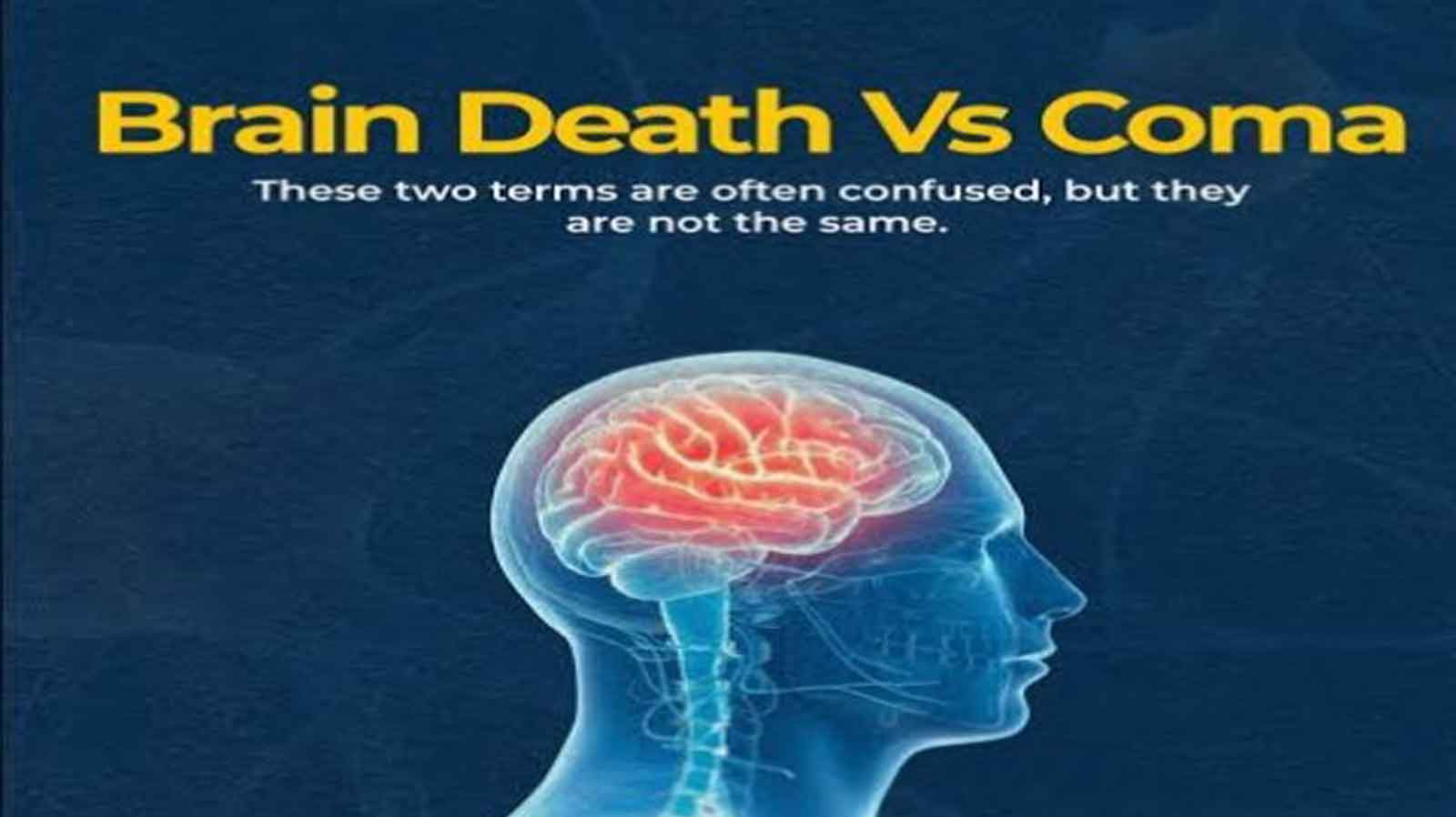
Brain death is the most severe condition. It occurs when there is irreversible and complete loss of all brain functions, including the brainstem, which controls breathing and reflexes. A brain-dead person cannot breathe without a ventilator, shows no reflexes, and has no brain activity. Importantly, brain death is legally and medically considered death, even though the heart may still beat with life support. There is no possibility of recovery from brain death. Loss of consciousness can occur in several medical conditions, but brain death, coma, vegetative state, and minimally conscious state are fundamentally different in terms of brain function, reversibility, and legal status.
The person does not wake up, does not respond meaningfully to stimuli, and has no awareness, but basic brainstem functions like breathing may still be present. Unlike brain death, coma can be temporary, and patients may recover, progress to another state, or worsen depending on the cause (such as head injury, stroke, infection, or poisoning).
A coma, on the other hand, is a state of deep unconsciousness in which the patient is alive but unresponsive. In coma, the brain is severely depressed but not permanently damaged.
However, minimally conscious state is a more advanced condition in which the patient shows limited but definite signs of awareness, such as following simple commands or purposeful movements. Unlike brain death, all these conditions involve a living person, and some degree of improvement is medically possible, especially in coma and minimally conscious states. Other related conditions lie between coma and full awareness. A vegetative state occurs when a person regains sleep–wake cycles and may open eyes, but has no conscious awareness of self or surroundings; brainstem functions are intact, but higher brain functions are severely damaged.