However, if you haven’t had any luck growing your own houseplants or are too busy taking care of them, consider growing plant varieties with low water requirements
While all plants need water to survive, there are some houseplants that can last a month or more without needing to be watered. The best way to test if an ornamental plant needs water is to feel the soil—if the top 25 to 50 percent feels dry, give the plant water.
However, if a plant owner often forgets to check houseplants, choose certain varieties that are much more tolerant than others.
Reporting from Martha Stewart, Wednesday (26/11/2025), here are some ornamental plants that continue to thrive with little watering.
Mother-in-law’s tongue
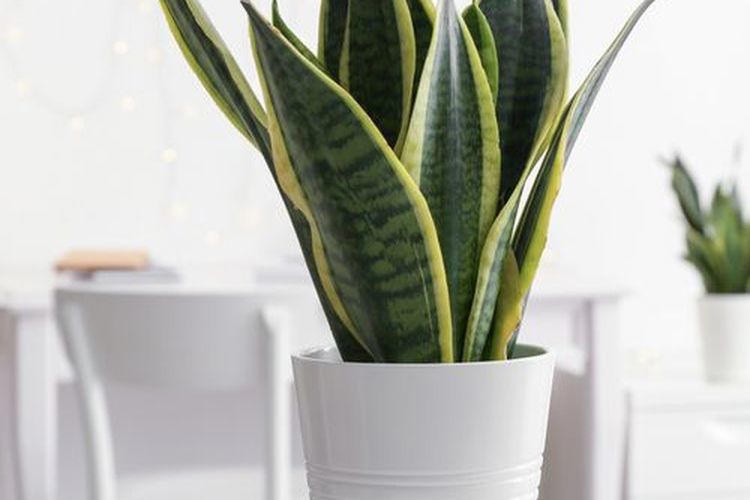
Mother-in-law’s tongue (Dracaena trifasciata) is known to thrive in conditions of low water and low light, making it a very easy plant to care for.
Its thick, sword-shaped leaves make it drought resistant. You can leave the potting soil to almost completely dry between waterings.
“However, if you want to water it more often, water it after the top of the potting medium is 25-50 percent dry,” says Justin Hancock, a horticulturist at Costa Farms, a grower of more than 1,500 plant varieties.
In-laws’ tongue plants need light to minimal light and well-drained potting media. The more light the mother-in-law’s tongue plant receives, the more water it needs.
“This means that houseplants are more likely to need more water if they are placed near a south-facing glass patio door than on the farthest side of a room with only a small window,” Hancock said.
Aglonema
Furthermore, an ornamental plant that continues to thrive with little watering is aglonema (Chinese Evergreen).
Aglonema is a very hardy houseplant and can survive almost entirely in dry conditions.
“As with all plants on this list, be careful not to overwater—aglaonema prefers to be over-dry,” Hancock says.
This plant has green leaves of various colors, from white, silver, red, pink, to orange.
Spider plants
The spider plant (Chlorophytum comosum) is one of the most popular houseplants among gardeners.
“Spider plants have thick, fleshy roots that store water so they can survive in drought,” Hancock added.
Spider plants can survive several weeks without water, especially in low-light conditions.
If it is too dry, the spider plant will show signs of drought with soft, drooping leaves, followed by brown leaf tips and edges.
Jade plant
Jade plants are also houseplants that continue to thrive with little watering.
As a succulent, the jade plant (Crassula ovata) is popular for its low water requirements and its ability to survive several weeks without water.
“The way I usually recommend watering cacti and succulents is to insert a wooden toothpick into the drainage hole under the pot. Let it sit for about a minute, then pull it out,” Hancock explained.
If the toothpick comes out clean and there is almost no growing medium on it, the pot is dry and may need to be watered.
However, if the moisture is enough so that the planting medium can stick to the wood, you don’t need to water the plants at that time.
Ponytail palm
Finally, an ornamental plant that continues to thrive with little watering is the ponytail palm or horsetail palm.
Native to the deserts of Mexico and Central America, the ponytail palm (Beaucarnea recurvata) has evolved to thrive in drought conditions by storing water on its stems.
“This plant can survive almost completely dry,” Hancock says, adding that ponytail palms grow best if watered regularly.
For optimal growth, water when the top 25-50 percent of the potting medium is dry, but don’t worry if you forget to water it every now and then.