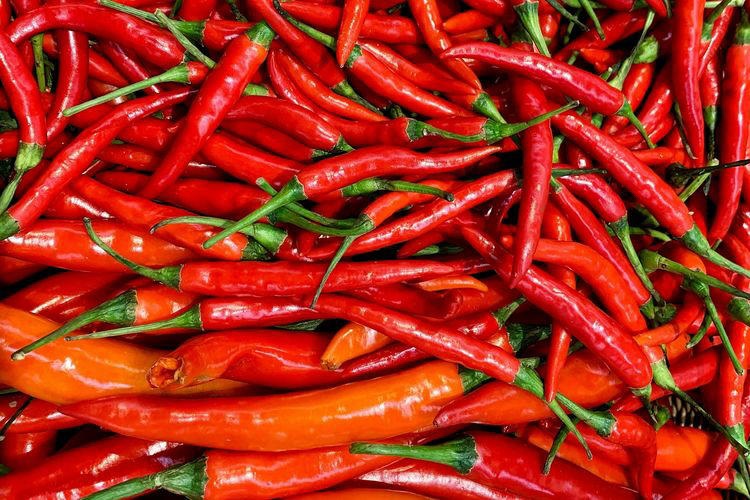
Reporting from Earth.com, Thursday (9/10/2025), in a study published in the journal Zhonghua Liu Xing Bing Xue Za Zhi in 2025, the research team analyzed data on 54,859 adults.
From the data, they found that compared to the group that rarely consumed spicy foods, respondents who ate six to seven days a week had a lower risk of developing ischemic heart disease and cerebrovascular disease. A reduced risk is also seen in ischemic stroke, which is a condition when blood flow to the brain is blocked. In fact, the more often a person eats spicy foods, the lower the risk of ischemic stroke observed. Interestingly, a moderate-intensity spicy taste was actually correlated with a reduced risk of cardiovascular and cerebrovascular disease overall.
In addition, the habit of consuming spicy foods from a younger age was also associated with a lower risk although these effects were not found in hemorrhagic strokes.
The role of capsaicin in chili peppers
The spicy sensation in chili peppers comes from a bioactive compound called capsaicin. The compound not only affects taste, but also acts on certain receptors in the body, including in nerves and blood vessel layers.
A number of animal studies have also shown that routine stimulation of these receptors can increase the production of nitric oxide, a compound that plays a role in relaxing blood vessels and improving blood flow. The effect is associated with a decrease in blood pressure, especially in individuals with hypertension. Blood vessels that are more relaxed and elastic are considered to be able to reduce the workload of the heart and reduce the risk of damage to blood vessels in the long term. Thus, the benefits of capsaicin are not only felt as a momentary spicy sensation but also have an impact on overall vascular health.
Consuming chili is unable to cure heart and brain diseases
However, the researchers insist the findings do not mean chili peppers can cure heart or brain disease. The research conducted is also observational so that the cause-and-effect relationship cannot be ascertained.
However, the consistency of the findings in different countries shows that regular consumption of spicy foods is often associated with better health outcomes. Experts assess that these benefits may come from a combination of the biological effects of capsaicin and the lifestyle of people who are used to consuming chili. The level of spiciness is also an important note. The health benefits can be seen in the consumption of chili peppers with light to moderate intensity, not extreme.
For people who want to try, using chili peppers as a spice for daily cooking can be a simple step.
However, people with certain conditions such as gastric disorders are still advised to adjust consumption to the body’s tolerance and consult medical personnel if necessary.
Supported by previous research
The findings from Sichuan reinforce the results of previous research. Research published in the BMJ (Clinical research ed.) in 2015 showed that people who ate spicy foods 6 to 7 days per week had a 14 percent lower risk of death than those who ate rarely.
The reduced risk was also seen in deaths caused by ischemic heart disease and respiratory disease.
Meanwhile, a cohort study in Italy found that chili consumption more than 4 times a week was associated with lower rates of total mortality and mortality from cardiovascular disease.
Interestingly, the relationship persisted even though the researchers took into account respondents’ adherence to Mediterranean dietary patterns.