
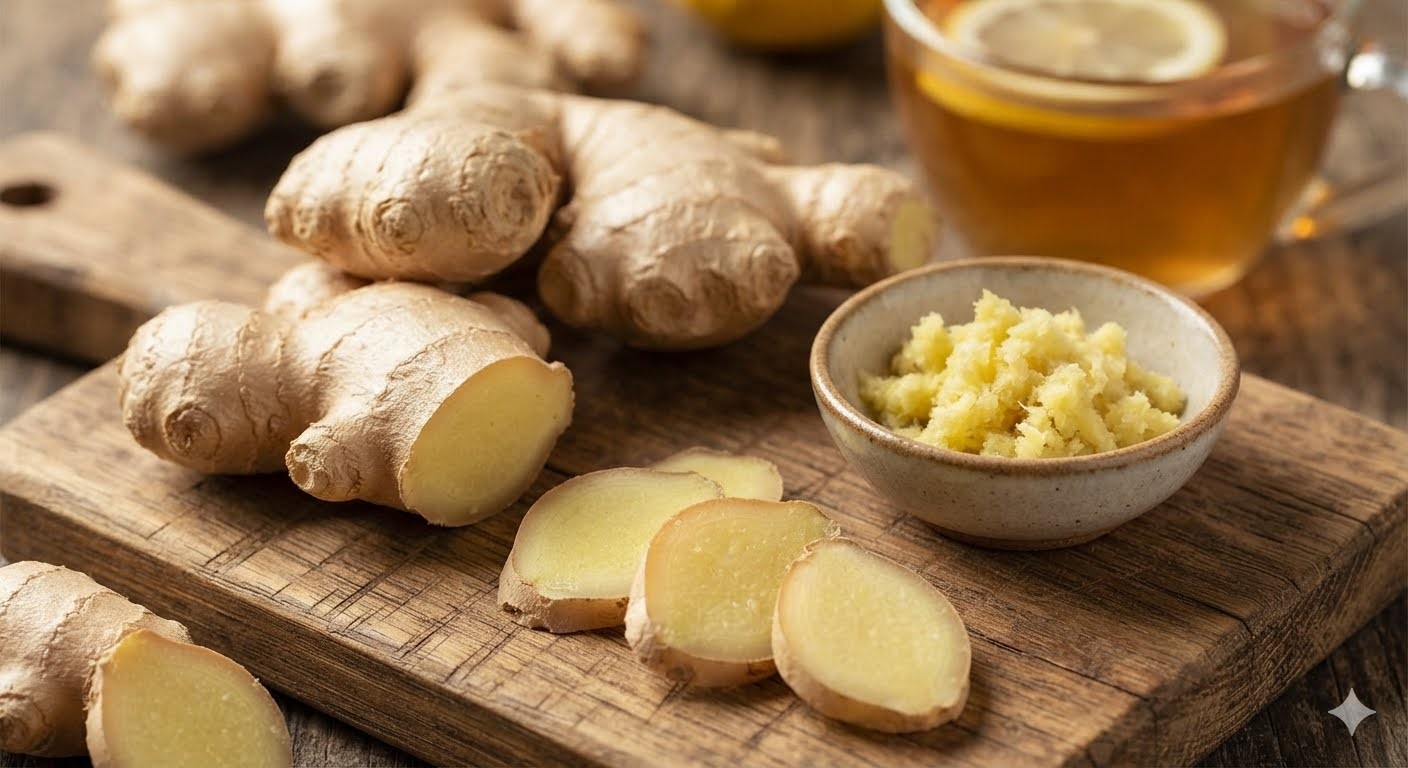
Turning to nature’s medicine cabinet can offer a gentle, holistic approach to managing minor aches and discomfort. Many everyday foods and household staples contain powerful active compounds that share characteristics with common anti-inflammatory or soothing agents.
Here is a look at 10 natural ingredients widely recognized for their pain-relieving properties, along with how to integrate them into your routine.
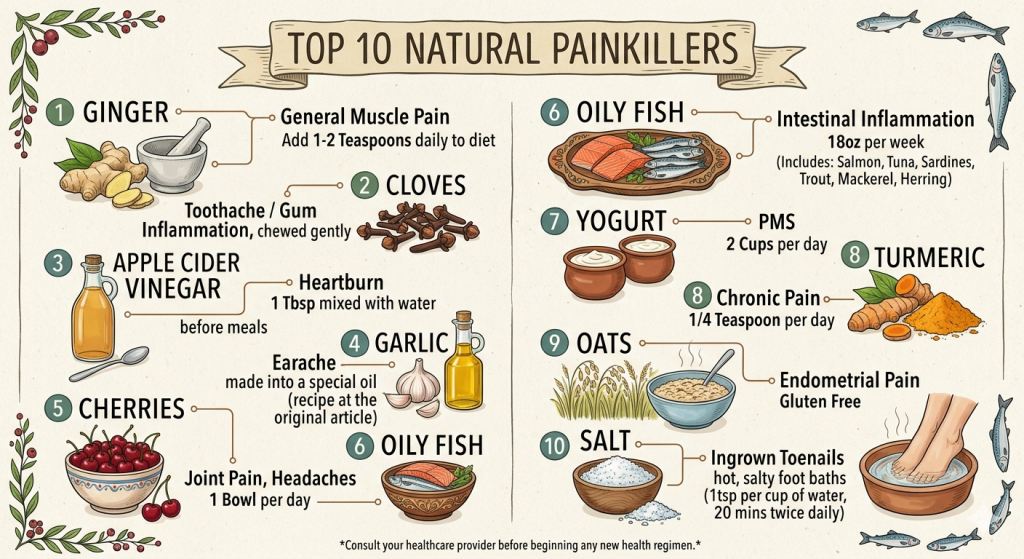
1. Ginger (General Muscle Pain)
The Routine: Add 1 to 2 teaspoons of grated or ground ginger daily to your diet.
How It Works: Ginger contains potent anti-inflammatory compounds called gingerols. Research suggests it helps ease sore muscles, joint stiffness, and exercise-induced inflammation by targeting inflammatory pathways in a manner similar to over-the-counter pain medications.
2. Cloves (Toothache & Gum Inflammation)
The Routine: Chew a whole clove gently near the affected area or hold it against the painful spot.
How It Works: Cloves are rich in eugenol, a natural anesthetic and blood thinner. It helps numb local nerve endings quickly, making it a reliable household option for temporary dental discomfort or minor oral inflammation.
3. Apple Cider Vinegar (Heartburn)
The Routine: Mix 1 tablespoon in a glass of water and drink it right before meals.
How It Works: While it sounds counterintuitive to add acid to combat heartburn, apple cider vinegar helps balance stomach pH levels and aids digestion, reducing the likelihood of acid backflow that causes a burning sensation.
4. Garlic (Earaches)
The Routine: Infuse crushed garlic into a warm carrier oil (like olive oil) to make a soothing ear drop.
How It Works: Garlic contains allicin, a strong compound possessing natural antibiotic and antimicrobial properties. Warm garlic oil can ease pressure and fight superficial infections in the ear canal.
5. Cherries (Joint Pain & Headaches)
The Routine: Enjoy 1 bowl of fresh or tart cherries per day.
How It Works: The deep red color of cherries comes from anthocyanins, heavy-duty antioxidants that suppress inflammatory enzymes. Regular consumption is heavily associated with reduced uric acid levels and lessened joint throbbing.
6. Oily Fish (Intestinal Inflammation)
The Routine: Consume 18 ounces per week of wild-caught fishlike salmon, tuna, sardines, trout, mackerel, or herring.
How It Works: These specific varieties are loaded with Omega-3 fatty acids (EPA and DHA). Omega-3s fundamentally alter the body’s inflammatory response, reducing systemic swelling, which directly supports gut and joint health.
7. Oily Fish (Intestinal Inflammation)
The Routine: Consume 18 ounces per week of wild-caught fish like salmon, tuna, sardines, trout, mackerel, or herring.
How It Works: These specific varieties are loaded with Omega-3 fatty acids (EPA and DHA). Omega-3s fundamentally alter the body’s inflammatory response, reducing systemic swelling, which directly supports gut and joint health.
8. Turmeric (Chronic Pain)
The Routine: Incorporate 1/4 teaspoon daily into your cooking or warm beverages.
How It Works: Turmeric’s secret weapon is curcumin, a compound that lowers the specific enzymes responsible for chronic swelling. It provides systemic anti-inflammatory support, helping manage long-term discomfort without synthetic side effects.
9. Oats (Endometrial Pain)
The Routine: Eat a standard portion of oats daily; ensure they are certified gluten-free.
How It Works: Oats are incredibly high in magnesium, a mineral essential for muscle relaxation. For individuals dealing with endometrial or pelvic tightness, increasing dietary magnesium helps prevent aggressive muscle spasms.
10. Salt (Ingrown Toenails)
The Routine: Prepare a hot foot bath using 1 teaspoon of salt per cup of water. Soak the foot for 20 minutes, twice daily.
How It Works: A warm saline solution utilizes osmotic pressure to draw fluid out of swollen tissues. This reduces the localized pressure, softens the skin around the nail, and provides natural antiseptic cleansing to prevent infection